

Laying the Foundation of Basic Quality as part of Operational Excellence Journey
Introduction
In today’s competitive business landscape, business enterprises face the challenge of delivering high-quality products and services while optimizing their operations for efficiency and cost-effectiveness. One approach that has gained significant traction is Lean Six Sigma, a methodology renowned for its ability to streamline processes, reduce waste, and improve overall quality. However, before diving headfirst into the complexities of Lean Six Sigma deployment, organizations must first establish a solid foundation of basic quality in their operations .This article aims to guide organizations on implementing basic quality practices while they are embarking on their operational excellence journey.
The Relevance of Basic Quality in any Organization
Quality forms the bedrock of any successful business operation. For any business enterprise, establishing a reputation for delivering consistent and reliable products or services is crucial for customer satisfaction, retention, and long-term growth. By implementing basic quality practices, companies can build a strong foundation that will not only enhance customer trust but also pave the way for a smoother transition to more advanced methodologies like Lean Six Sigma.
Implementing Basic Quality Practices
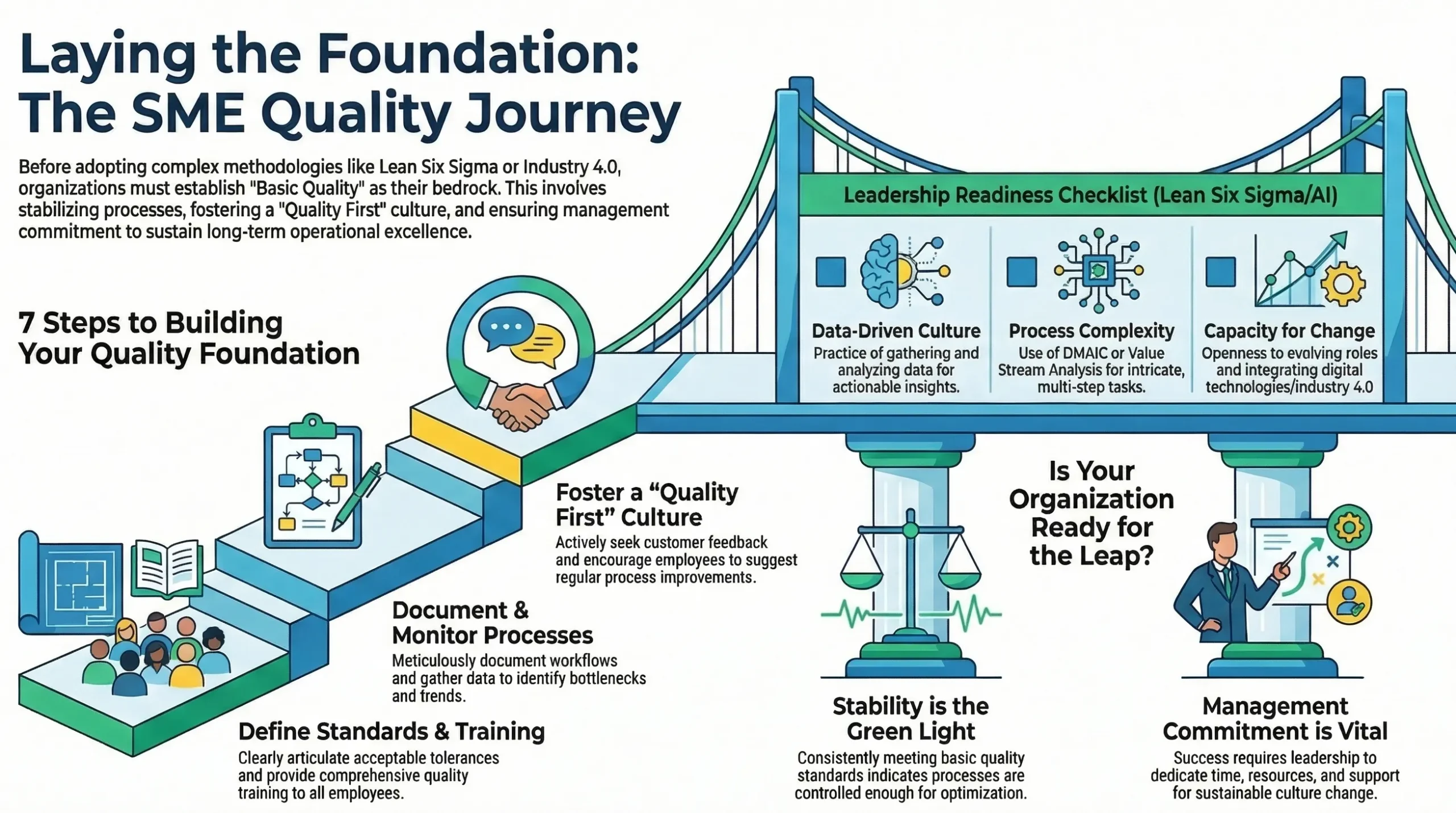
Many companies incorporate Quality as a key performance indicator (KPI) and a fundamental driving force in their core values. However, they may lack a structured framework for driving improvements. The foundational quality practices should be tailored to tackle variability in the manufacturing process, enhance internal process yields, and instil a ‘Quality First’ culture in their operations. This fundamental quality framework includes activities such as process documentation, continuous process monitoring aimed at eventual problem resolution, and proactive measures for problem prevention, all supported by effective long-term sustainment. Let us look into some of the initial steps in building quality foundations
- Define Quality Standards: Clearly articulate what constitutes a quality product or service within your business unit. This includes defining acceptable tolerances, specifications, and performance metrics.
- Quality Training: Provide comprehensive training to your employees about the importance of quality and how their roles contribute to delivering it. Ensure they understand the impact of their work on the end product and the customer.
- Supplier Management: Engage in a careful selection process for suppliers. Collaborate with those who share your commitment to quality, as the quality of your inputs significantly impacts the quality of your outputs.
- Process Documentation: Document your business processes meticulously. This will help identify bottlenecks, areas for improvement, and opportunities for standardization.
- Process monitoring through Data Collection/ Analysis and Visual workplace: Start gathering relevant data related to your processes and products. The mantra to gather data should be “Measure Everything That Results In Customer (external & internal) Satisfaction” i.e. (METRICS). Analyse this data to identify trends, patterns, and potential areas for improvement. Set up visual workplace through process control charts, scrap marketplace etc.
- Continuous Improvement Culture: Foster a culture that encourages employees to identify and suggest improvements. Regularly review processes to incorporate feedback and make necessary changes.
- Customer Feedback: Actively seek and listen to customer feedback. Use it to make informed decisions about product or service enhancements.
Is your organization Ready for Operational Excellence Journey?
While Lean Six Sigma can be a game-changer in your Operational Excellence journey, not all of them, especially the SMEs are ready to embark on this journey immediately. Consider the following factors before making the leap:
- Stable Basic Quality: If your organization has consistently met its basic quality standards, it’s an indicator that your processes are under control. Lean Six Sigma builds upon this foundation, aiming to optimize processes that are already functioning well.
- Data-Driven Culture: Organizations rely heavily on data analysis to identify inefficiencies. Having a practice of gathering and analysing data in your organization puts you in an advantageous position to derive actionable insights. These insights empower you to make well-informed decisions and set new performance benchmarks, ultimately paving the way for new opportunities and future growth.
- Process Complexity: Lean Six Sigma is particularly effective when dealing with complex processes with multiple steps. If your operational processes are intricate in nature, it requires more structured framework such as DMAIC or Lean Value stream analysis so the processes can be well analysed & optimized with continuous experimentations and with well-defined standardized work.
- Management Commitment: The leadership’s commitment is vital for continuous improvement culture. If management is fully on board with dedicating time, resources, and support to this culture change, the chances of high success rate in Quality, cost & delivery are evident with sustainable business growth
- Capacity for Change: Implementing basic quality practices requires culture change in processes, roles, and also at organization level. Embracing change within your organization signals a positive stride toward operational excellence and embarking on a Lean management journey. This sets the groundwork for the integration of AI, digital technologies, big data, and Industry 4.0, which are increasingly becoming the new normal.
Conclusion
Implementing basic quality practices in organizations is a vital step towards building a solid foundation for future improvement initiatives. By fostering a culture of quality, data-driven decision-making, and continuous improvement etc. That can lay the groundwork for enhanced efficiency, reduced waste, and improved customer satisfaction.
Before embarking on Operational Excellence / AI / digital journey, organizations should evaluate their process readiness based on factors highlighted above; such as stability in basic quality practices, data-driven culture, tackling process complexity, management commitment, and capacity for change. Armed with these insights, organizations can navigate the path to operational & business excellence with greater confidence and higher chances of success.